How Google indexing works: From unknown website to search result
· Google · 10 min
Many wonder why their website does not appear in Google. Here we explain the entire process from Google discovering your site to it appearing in search results.
For many business owners, Google visibility is something that just happens, or does not happen, without fully understanding why. You create a website, publish it, and wait for customers to pour in. When that does not happen, the frustration can be significant. To understand why your website might not show up in Google, it helps to understand how Google's indexing process actually works.
Step 1: Discovery
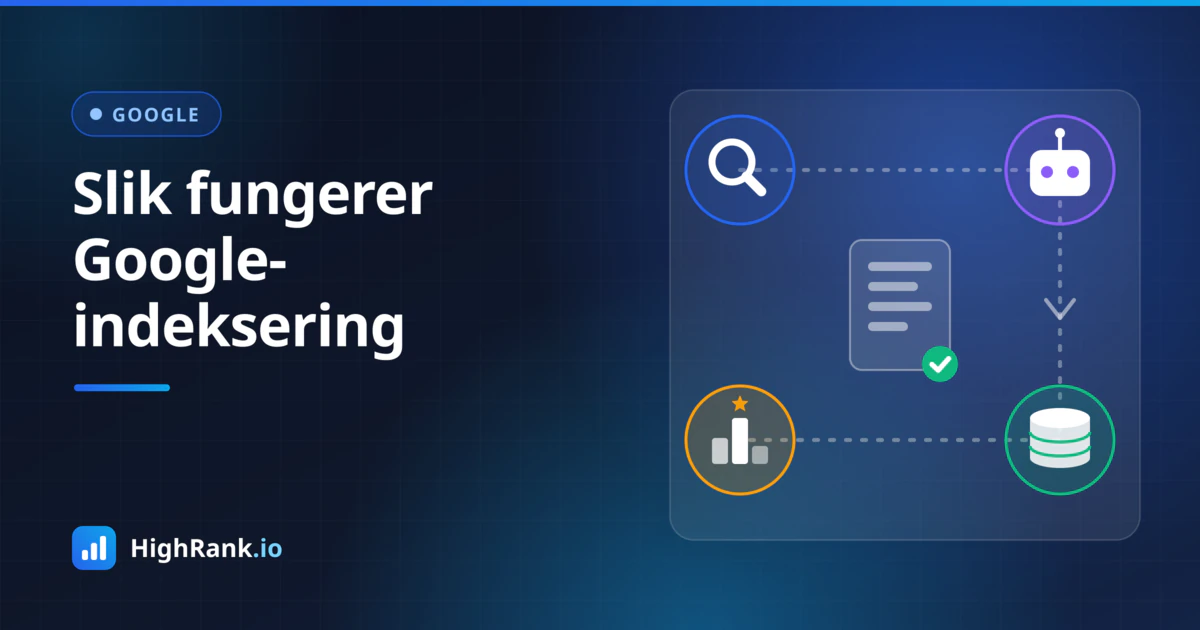
Everything starts with discovery. Google has an army of automated programs, known as Googlebot, that constantly crawl around the internet following links from one page to another. When Googlebot finds a link to a page it has not visited before, it adds that page to the queue for visiting. This is the first step toward indexing.
But Googlebot does not discover all pages automatically. If your website is brand new and no other websites link to it, it can take a long time before Google even knows it exists. This is where tools like Google Search Console come in. By submitting a sitemap directly to Google through Search Console, you explicitly tell Google about all the pages on your website. This does not guarantee indexing, but it significantly increases the chances.
Step 2: Crawling
The next step is crawling, meaning the actual visit. When Googlebot visits a page, it downloads the HTML code and attempts to render the page as a browser would. This is where problems can arise. If your website uses heavy JavaScript rendering without server-side rendering, Googlebot may have difficulty seeing all the content. If robots.txt blocks access to important resources, Googlebot will not get a full understanding of the page.
Step 3: Indexing
After crawling comes indexing. Google analyzes the content on the page and tries to understand what it is about. It looks at text, images, headings, meta tags, structured data and many other signals. Based on this analysis, Google decides whether the page is worthy of indexing and, if so, which search terms it is relevant for.
It is important to understand that not all pages get indexed. Google has limited capacity and prioritizes pages it considers valuable and unique. Pages with thin content, duplicate content or low quality may be left out of the index. This is one of the reasons why quality should always come before quantity in content production.
Step 4: Ranking
When a page is indexed, it means it is stored in Google's database and can potentially appear in search results. But indexing does not guarantee good ranking. Ranking is a separate step where Google compares your page with all other indexed pages to determine the order they should appear in for a given search.
Google's ranking algorithm evaluates hundreds of factors, but some of the most important include the relevance and quality of the content, the website's technical health, user experience, the authority of the website measured through incoming links from other relevant websites, and alignment with the user's search intent.
Local SEO is particularly relevant for many businesses. When someone searches for a service with a place name, Google uses local signals to show relevant results. An updated Google Business profile, consistent NAP data across the web, and locally relevant content are all important factors for local visibility.
Patience and monitoring
Building visibility in Google takes time. For a brand new website, it can take several weeks or months before pages begin to appear in search results, and even longer before they achieve good rankings. This is a natural part of the process. Google needs time to discover, crawl, index and evaluate your website. Patience, combined with continuous improvement, is the key.
Regular monitoring is essential. Google Search Console provides valuable insight into how Google sees your website, including which pages are indexed, which keywords generate impressions and clicks, and any technical issues that may affect visibility. By keeping track of this data, you can identify problems early and adjust your strategy as needed.
To summarize, the path from unknown website to visible search result is a multi-step process: discovery, crawling, indexing and ranking. Each step has its own requirements and potential pitfalls. By understanding this process, you can make more informed decisions about how to invest time and resources in your digital marketing.